




Skip to the main content
You are invited to participate in the

Neuromuscular Disease Real-World Experience Registry, a national initiative led by Muscular Dystrophy Canada.

Before deciding whether to participate, please read this information carefully. It explains why the registry is being conducted, what participation involves, how your information will be used and protected, and your rights as a participant. Please ask any questions you may have before deciding whether to participate. Participation is completely voluntary.

Takes about 15 minutes. You can stop and come back at any time.

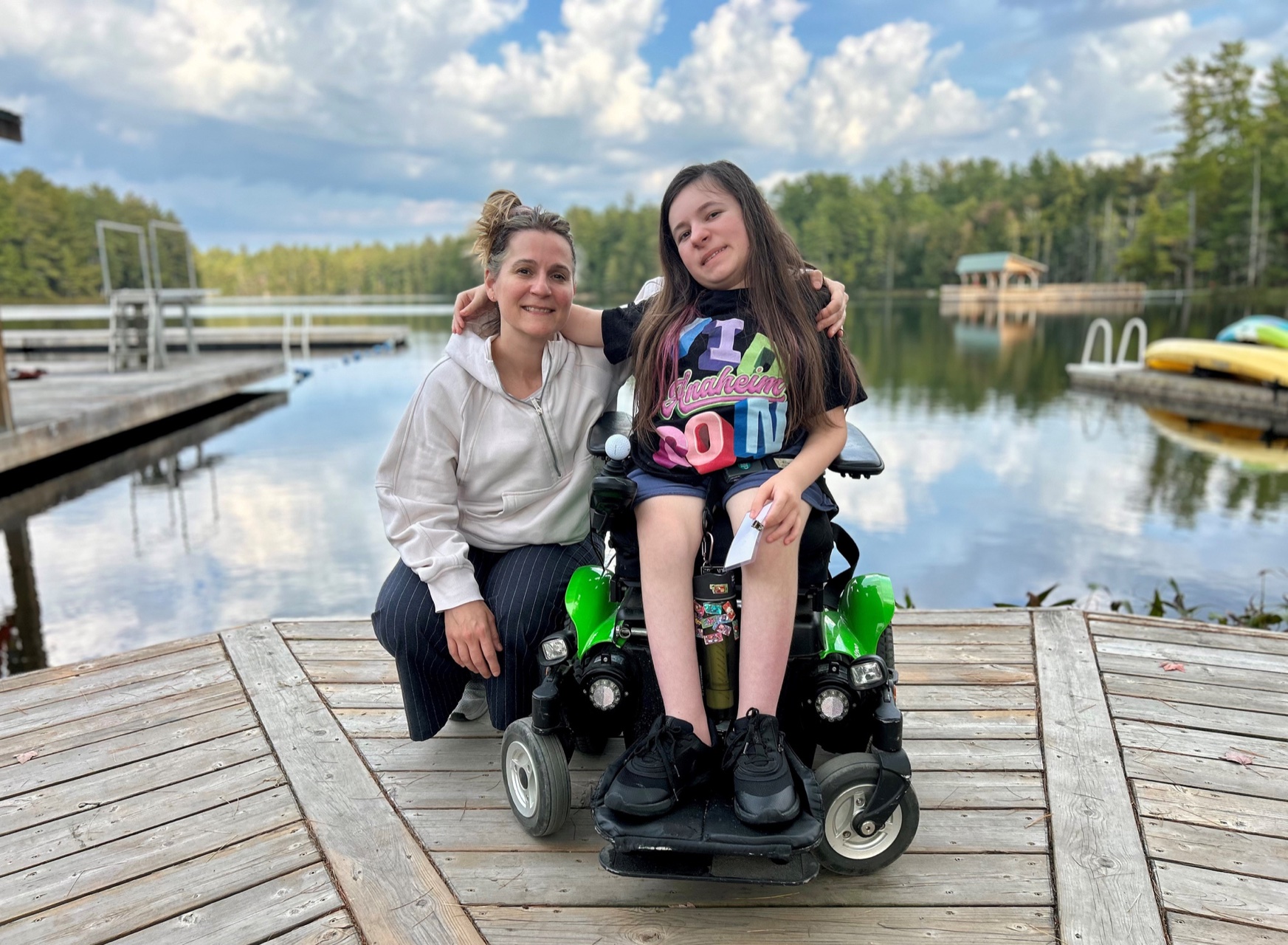
A parent kneeling beside her daughter, who uses a power wheelchair, on a lakeside dock

Why is this patient-powered registry important?

Many neuromuscular disorders are rare. For many of these conditions, we simply do not know how many people are living with them in Canada or where they live. Unlike some other diseases, there is no single national source of information that identifies the number and geographic distribution of Canadians living with neuromuscular disorders.

This information gap creates important challenges. Without a better understanding of who is living with these conditions across Canada, it is more difficult to:

  • Plan healthcare services and specialist care.
  • Understand the needs of people living with neuromuscular disorders across different provinces and territories.
  • Estimate how many people may benefit from newly approved treatments.
  • Support evidence-informed reimbursement and healthcare planning by governments.
  • Encourage clinical trials and research studies to include Canadian sites.
  • Demonstrate the need for new therapies to become available in Canada.
  • Connect people with research studies, clinical trials, educational opportunities, and advocacy initiatives.
  • Better understand the real-world experiences and unmet needs of the neuromuscular community.

The Neuromuscular Disease Real-World Experience Registry (NMD-RWx) was created by Muscular Dystrophy Canada to help address these gaps by building a national resource for research, healthcare planning, advocacy, and improved access to treatments and services.

Participation in the registry

Participation includes up to three components. You may choose to take part only in the National Contact Registry, or also join the optional Annual Health and Experience Surveys and Optional Data Linkage. You can change your mind about the optional parts at any time.

Part 1 · Required to join

National contact registry

The contact registry collects basic information so we can understand who is living with specific neuromuscular disorders across Canada, and where they live.

What it collects

  • Name
  • Contact information
  • Province or territory of residence
  • Year of birth
  • Neuromuscular diagnosis (or suspected diagnosis)
  • Diagnosis date, if known
  • Current treatments, where applicable

What joining helps make possible

  • Better estimate how many Canadians are living with different neuromuscular disorders.
  • Understand where people live across Canada to support healthcare planning.
  • Help governments better estimate how many people may benefit from newly approved treatments.
  • Strengthen advocacy efforts aimed at improving access to treatments and specialized care.
  • Demonstrate the need for clinical trials and new therapies in Canada.
  • Support planning and recruitment for future research studies and clinical trials.
  • Help researchers understand interest in future research opportunities.
  • Allow Muscular Dystrophy Canada to notify you about research studies, clinical trials, educational events, advocacy initiatives, and other opportunities that may be relevant to you.
Part 2 · Optional

Annual health and experience surveys

If you choose, once each year you may be invited to complete voluntary surveys about your experience of living with a neuromuscular disorder. They may include questions about:

  • Symptoms and disease progression.
  • Physical function and mobility.
  • Daily activities and independence.
  • Quality of life.
  • Mental health and emotional well-being.
  • Healthcare experiences.
  • Access to specialists and healthcare services.
  • Access to treatments, rehabilitation, and community supports.
  • Use of medications and emerging therapies.
  • Employment and education.
  • Financial impacts on individuals and families.
  • Caregiver experiences.
  • Interest in future research studies or clinical trials.

What you share helps identify unmet needs, shows how experiences change over time, and builds evidence to improve research, advocacy, healthcare planning, policy, and equitable access to treatments. Taking part is completely voluntary — you may remain in the contact registry even if you never complete a survey.

Part 3 · Optional

Data linkage

With your consent, information collected through NMD-RWx may be securely linked with other health and research data sources. Depending on the research project and the approvals in place, that may include:

Sources it may link with

  • Provincial or territorial healthcare administrative databases — hospital visits, physician visits, prescription drug records, and other healthcare services.
  • Electronic health records or clinical databases.
  • Canadian or international neuromuscular disease registries.
  • Disease-specific registries.
  • Clinical research databases.
  • Other approved research databases relevant to neuromuscular disorders.

What it helps researchers understand

  • Long-term health outcomes.
  • Healthcare utilization.
  • Disease progression.
  • Treatment effectiveness and safety.
  • Access to care.
  • The real-world experiences of people living with neuromuscular disorders.

Linkage also reduces how often participants are asked for the same information twice. It is completely optional — you can fully take part in the contact registry and the annual surveys without agreeing to it.

Your privacy and your rights

Nothing here is buried in fine print. This is what the risks actually are, how your information is handled, and what happens if you change your mind.

Risks

The risks of participating are minimal. The main one is a loss of confidentiality, if personal information were accessed by someone who is not authorized. Muscular Dystrophy Canada has physical, technical and administrative safeguards in place to protect your information and reduce that risk.

Privacy and confidentiality

Your personal information is stored securely and accessed only by authorized members of the research team. Wherever possible, information used for research is de-identified or coded before analysis.

Results may appear in reports, scientific publications and conferences — but nothing that could reasonably identify you will ever be published.

Voluntary participation and withdrawal

Taking part is entirely voluntary. You may withdraw at any time without giving a reason, and it will not affect your healthcare, your access to services, or your relationship with Muscular Dystrophy Canada.

If you withdraw, no new information is collected from you. Information already used in completed analyses or publications may not be able to be removed.

Questions before you decide?

Ask us anything about the registry or your participation. A person will answer — there is no wrong question, and asking does not commit you to anything.

Muscular Dystrophy Canada

[email protected]

1-800-567-2873 ext. 9037

www.muscle.ca

Ready when you are

Create one account for your household. You will read the consent information first, and nothing is submitted until you say so.